Build the funnel. See which step earns.
Pages, checkout, CRM, automations and a member area in one workspace. Every figure in the reports says whether it was measured, attributed or estimated.
The demo is a full workspace with example data. No sign-up.
From the first visit to the paid order, one record.
The page, the contact, the email, the deal and the order live in the same database. That is why the report can tell you which step earned the money.
- 01PageA visitor lands on a funnel page you built in the editor.
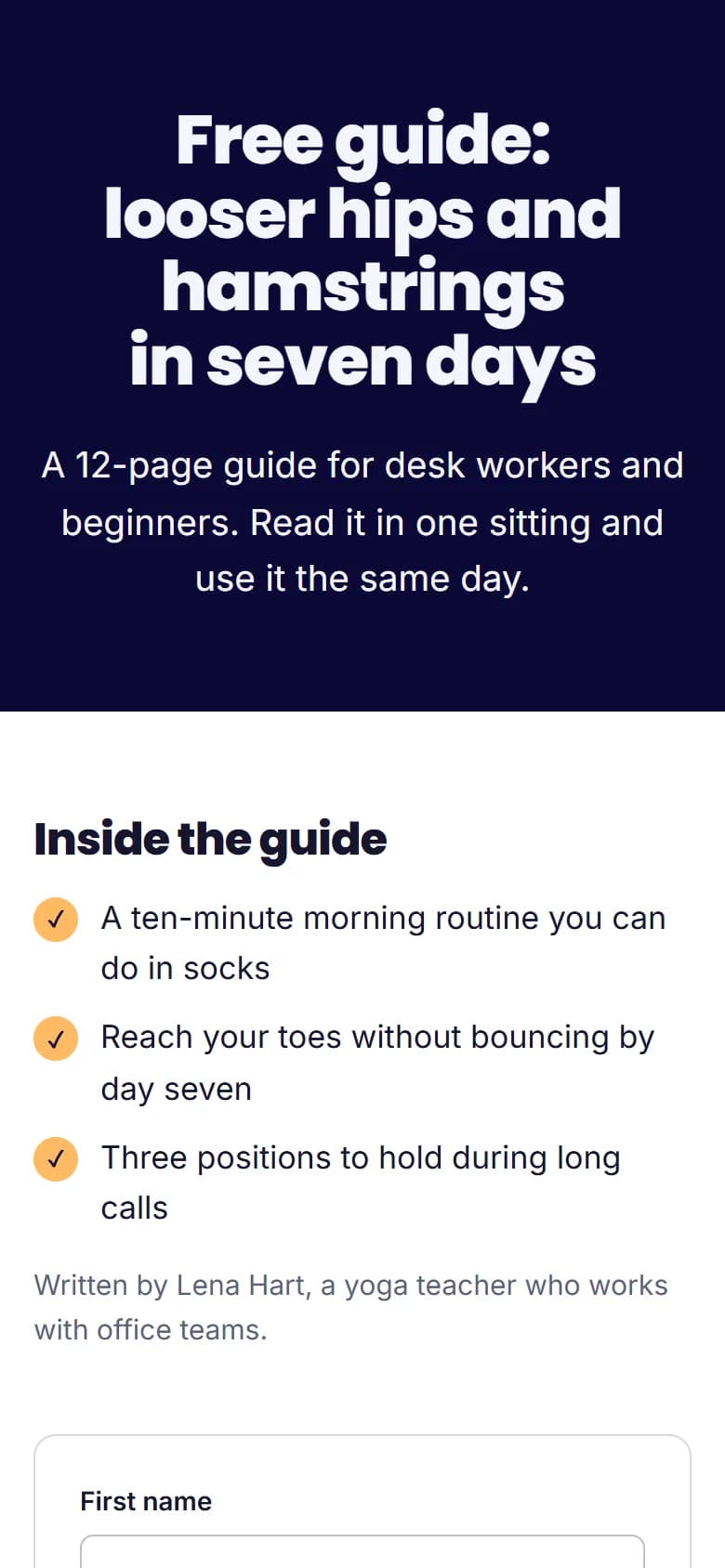
- 02FormThey leave their email. The contact is created with source and campaign.
- 03Follow-upA workflow sends the guide, scores the lead and opens a task.
- 04CheckoutThey buy, add the order bump and accept the one-click upsell.
- 05AccessThe member area opens their course; partners earn their commission.
- 06ReportThe revenue report shows which source and step brought the order.
A funnel is a map you can read.
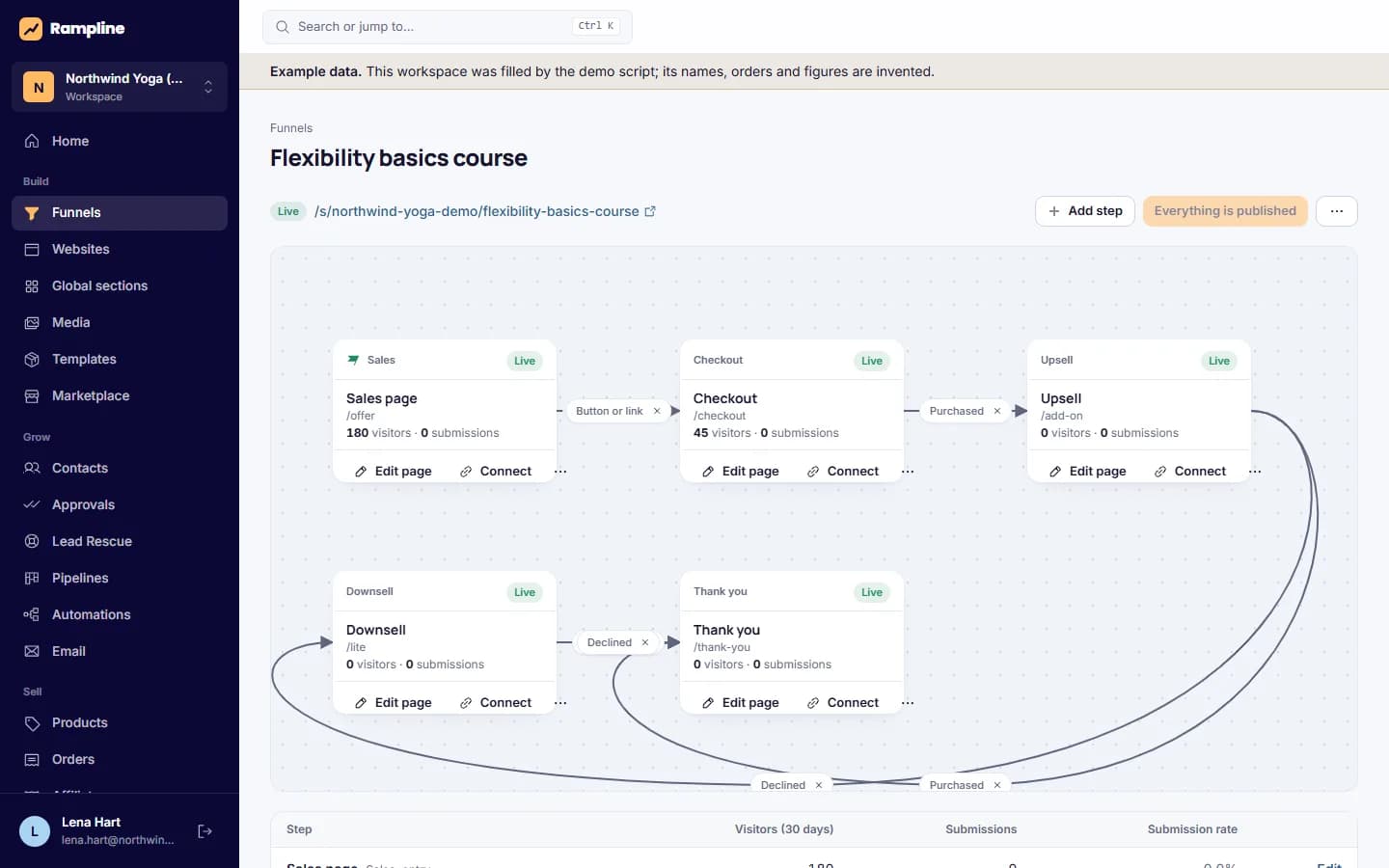
Steps sit on a canvas with the paths between them: submitted, purchased, declined. Each step shows visitors and submissions from the last 30 days, so a leak is visible where it happens.
Pages are built in a block editor with desktop, tablet and phone previews, revision history and checks for accessibility, speed and SEO before you publish.
How the funnel builder works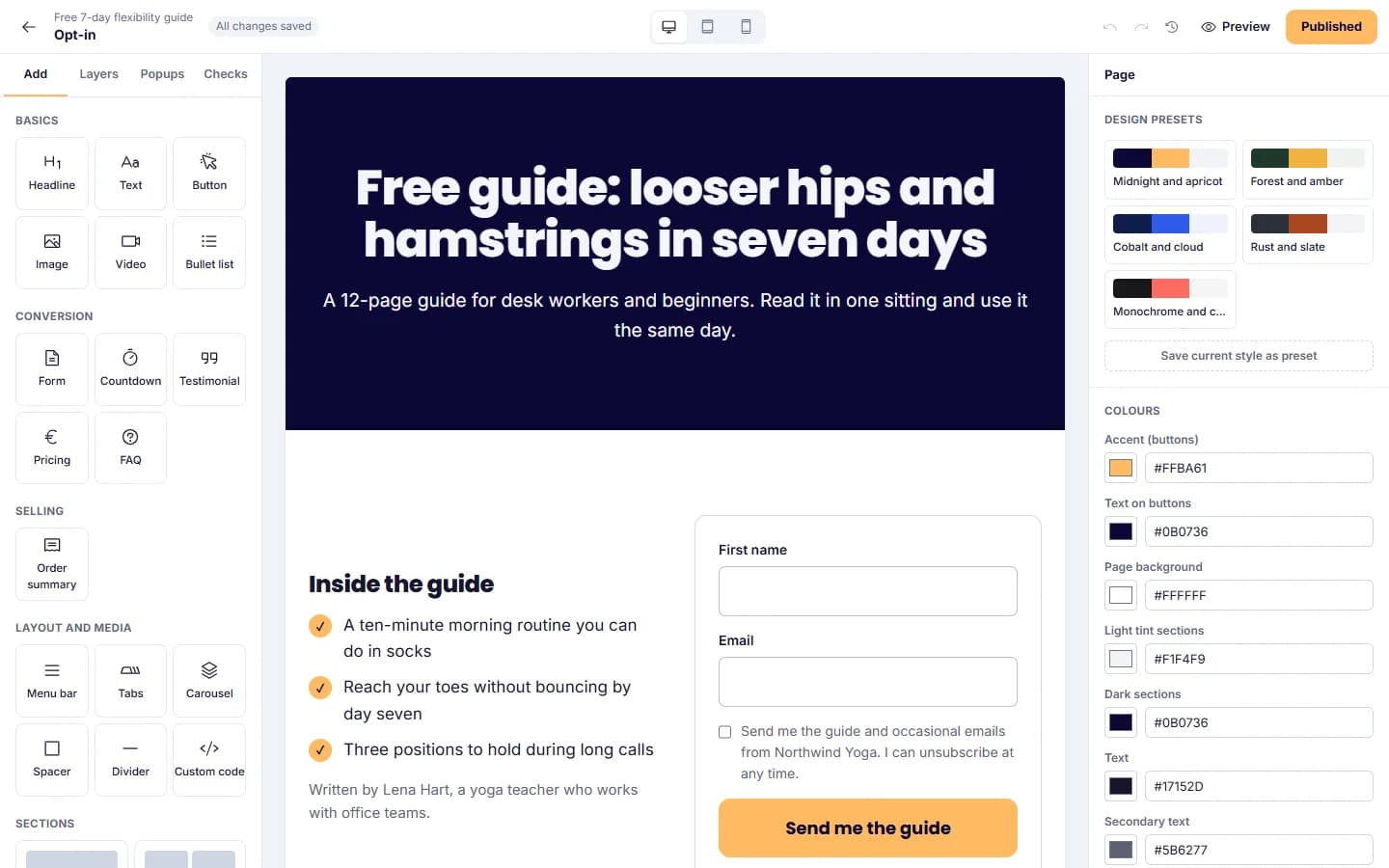
Revenue you can trace back to a source.
Visitors, leads, deals and paid orders in one view, by source, campaign or funnel. Enter what you spent on ads and see cost per customer and return on spend.
Each number carries a badge. Measured comes straight from your records, attributed follows a stated rule, estimate shows the formula next to it.
How the numbers are counted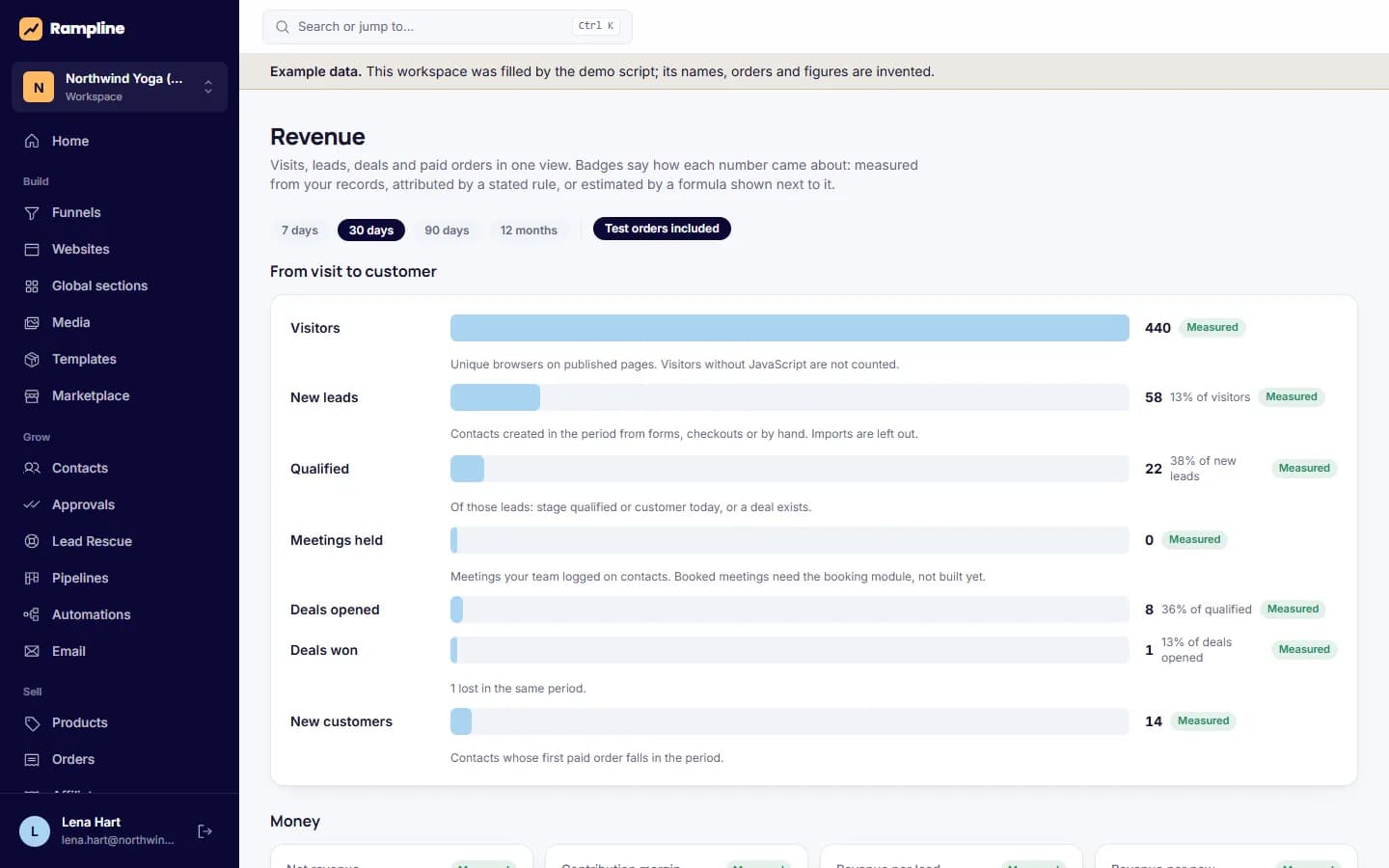
Leads that nobody answered get a name.
Every five minutes the worker looks for leads without an owner, first replies that never happened, overdue follow-ups, deals without movement and checkouts left open. The person responsible gets a notice; after a set time it escalates.
See Lead Rescue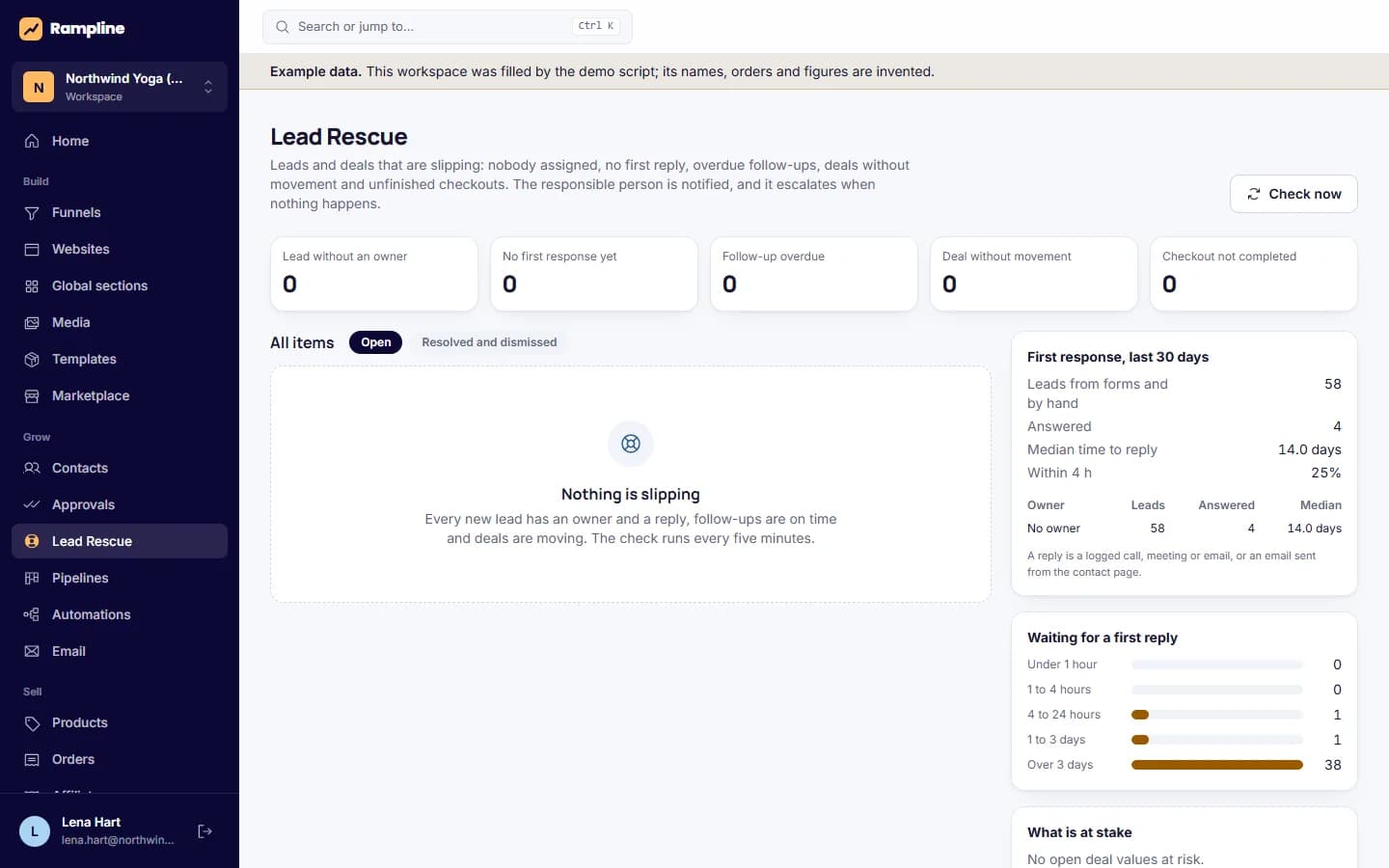
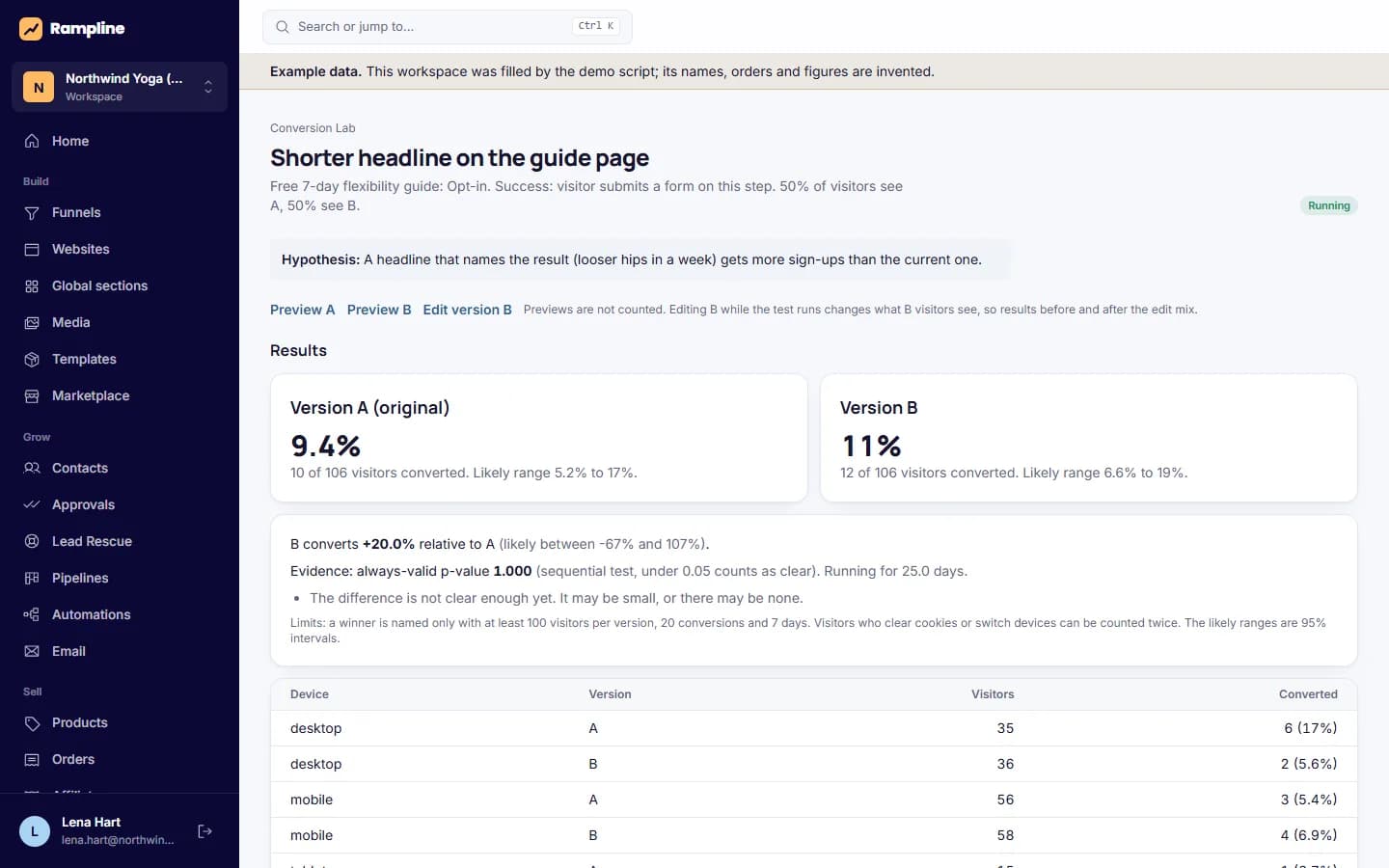
Test a headline without guessing the winner.
Version B starts as a copy of the live page. Visitors keep their version, and a winner is only named after 100 visitors per version, 20 conversions and seven days.
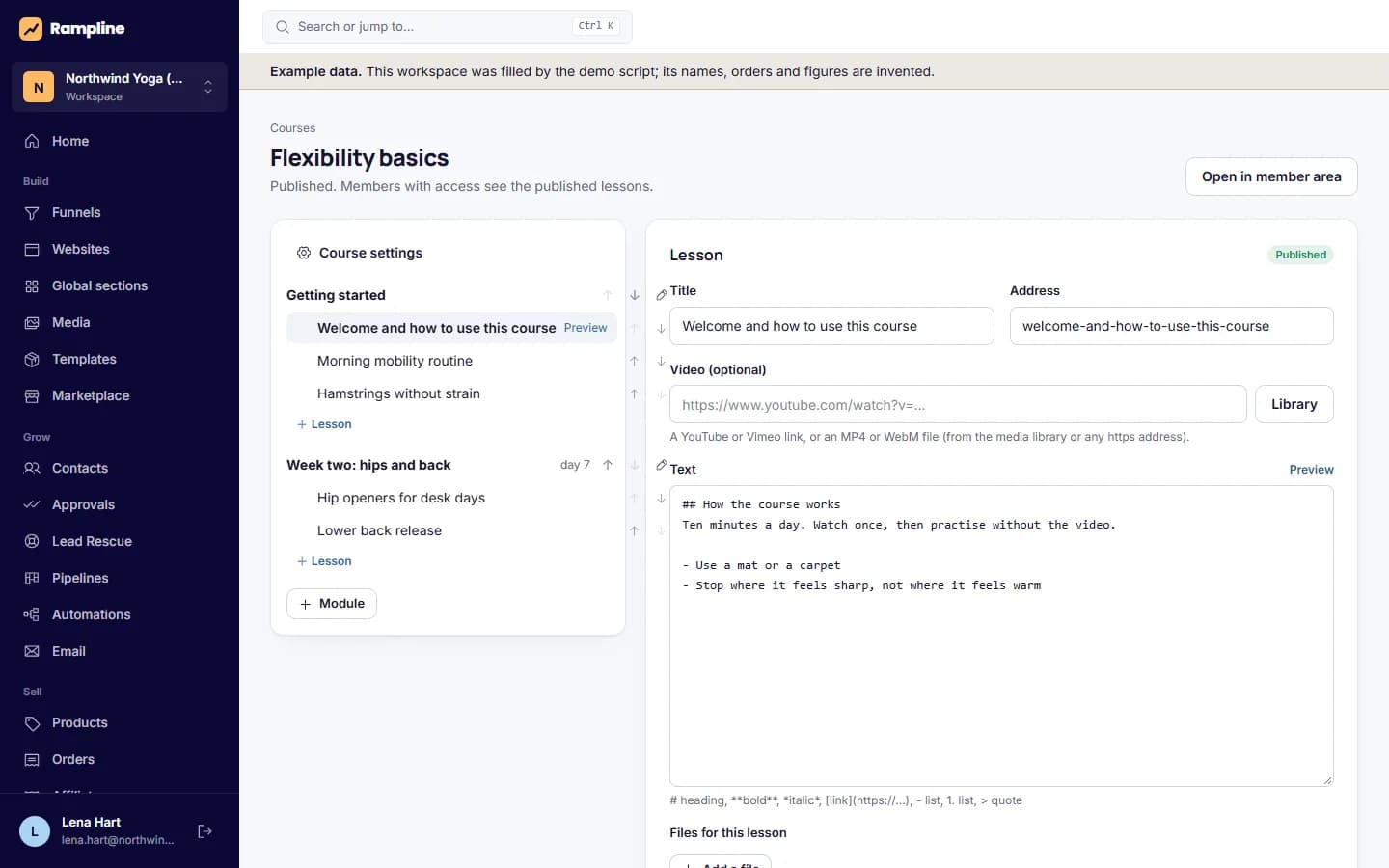
Sell the course, open the course.
A product can unlock courses, communities and membership levels. The paid order grants access, a refund takes it back, and affiliates earn their share after the hold period.
Three ways to run it.
The same software, sold three ways. Pick by who owns the customers and who runs the servers.
Subscription
We host it. You build funnels for your business, or for your clients on an agency plan with your own brand on top.
White-label license
You sell the platform as your own product: your name, your domain, your plans and customers, on our hosting.
Independent edition
You run it on your own servers with Docker. The license is checked offline; nothing phones home.
Status, stated plainly.
Software pages usually list everything as done. Here is where this one stands today.
- Funnels, page editor, websites and blog
- Checkout, order bumps, upsells, test payments
- CRM, pipelines, workflows, email campaigns
- Revenue report, A/B tests, Lead Rescue
- Courses, communities, affiliates
- Agencies, white label, offline licensing
- Stripe payments (test mode first)
- Email sending via SMTP, Resend or Postmark
- AI architect and sales assistant (Anthropic API key)
- S3-compatible file storage
- Two-way inbox, SMS and calendar bookings
- Ad platform connections (Google Ads, Meta)
- Heatmaps and session recordings
- Automatic card billing for platform plans
The full list, item by item, is in the implementation status.
See it with example data, then build your own.
The demo opens a complete workspace: funnels, contacts, orders, a running A/B test. Nothing to install, nothing to sign.